
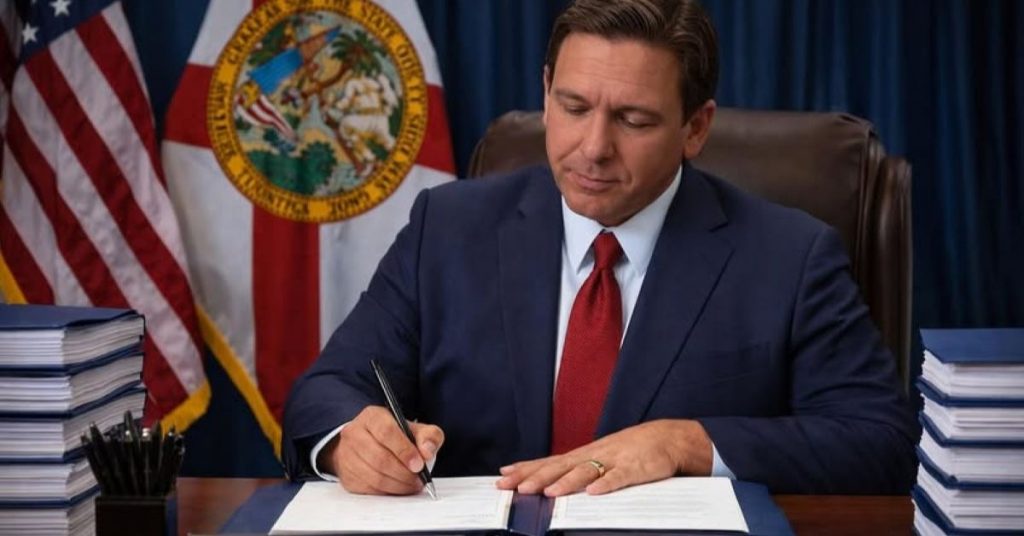
Florida Governor Ron DeSantis has signed a sweeping land-use bill, HB 399, that significantly limits the authority of local governments over development decisions.
The measure, sponsored by Republican Rep. David Borrero of Hialeah, is part of a broader effort by state leaders to override local zoning rules in order to accelerate housing construction. Lawmakers passed the bill largely along party lines after heated debate, though a handful of Republicans joined Democrats in opposition.
Supporters say the new law will help address Florida’s affordable housing shortage by reducing regulatory hurdles. It requires local governments to base development fees on actual review costs, apply clearer and more objective standards when evaluating projects, and provide written explanations when proposals are denied. It also pushes cities and counties to identify and resolve potential conflicts earlier in the approval process instead of rejecting applications outright.
However, the bill has drawn criticism for a controversial provision allowing certain large destination resorts to bypass traditional local review. One example is a planned renovation at the Fontainebleau hotel in Miami Beach. Attempts to remove that provision failed, although lawmakers added a sunset clause set for 2030.
Backers, including business groups and Senate sponsor Stan McClain, argue the law will increase housing supply and bring more consistency to land-use decisions while protecting property rights. Borrero contends that local regulations have driven up costs and restricted development.
Opponents, primarily Democrats, warn the measure weakens “home rule,” or the ability of local governments to control growth in their communities. Orlando Sen. Carlos Guillermo Smith called it a major overhaul of Florida’s growth management system.
Some of the most controversial elements were removed before final passage, including proposals that would have made it easier to build beyond Miami-Dade County’s Urban Development Boundary, which protects the Everglades, and a provision lowering voting thresholds for certain planning changes.
Local leaders in Miami Beach have been especially critical, arguing the law reduces public input and local oversight. City officials are considering legal action, with Commissioner Alex Fernandez urging a challenge and the City Commission already directing its attorney to explore potential litigation and negotiations related to the Fontainebleau project.
Source: Miami Times Online
