
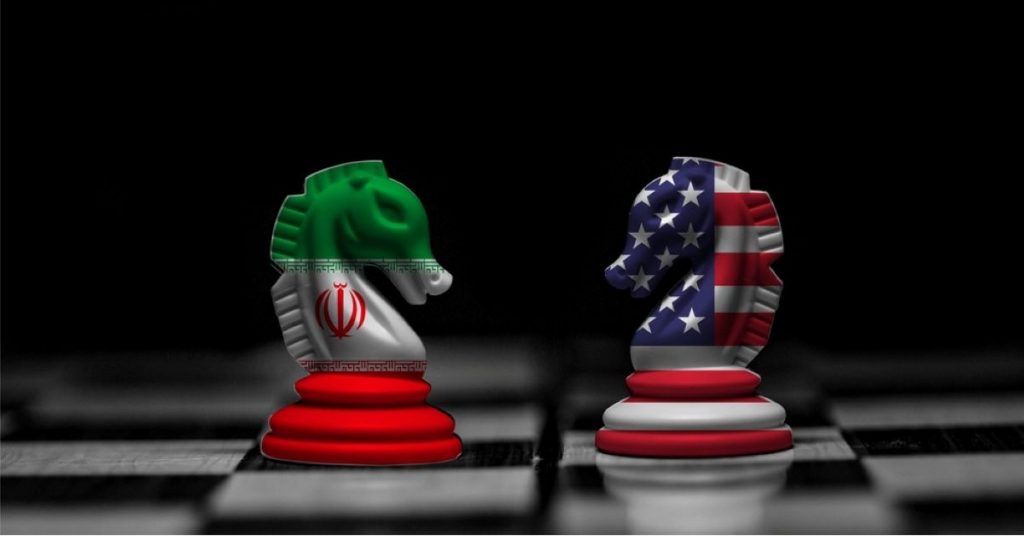
Recent developments in Iran and across the broader Middle East have added new uncertainty to the U.S. economy, including the commercial real estate sector.
While the duration of the conflict remains unclear, a prolonged war could create significant challenges driven by rising oil prices, higher inflation and volatile interest rates.
Commercial Property Executive spoke with Mark Barmak Besharaty, senior vice president of commercial lending at Arbor Financial Group and founder of CIPHES—the Center for Iran Prosperity, Holdings and Stability—and Michael Criscito, senior managing director and co-leader of real estate restructuring advisory at FTI Consulting. They shared their perspectives on how the conflict could affect the industry in both the short and long term.
CPE: In the short term, what impact do you think the conflict in Iran and the Middle East at large could have on U.S. CRE?
Mark Besharty: What we’re looking at is one of the primary factors in CRE, which is interest rates, because that affects debt service coverage ratios. It affects a lot of different things in terms of purchasing or refinancing property. The sector is already under some pressure without the conflict, especially office. While the industrial sector has been doing well, multifamily has been hit because of the higher interest rates. Retail is coming back, but office has been the toughest one.
Specific to this conflict, it depends on how interest rates move. Right now, they have been holding steady. They haven’t really risen a whole lot. The 10-year has gone up a little bit, and the five-year has come down. So, they’ve been essentially stable. When conflicts happen, a lot of times they’re followed by a flight to safety. If people start buying treasuries, because it’s the safest investment asset, then the interest rates will come down. Conversely, for CRE purchases, which is considered a little bit of a riskier asset, there might be less capital deployed for purchasing commercial assets. So, the market could see a slowdown.
Michael Criscito: Conflicts in general don’t necessarily have a direct impact. The real transmission mechanism, I think, is going to be energy prices and capital markets as a result of this particular event. If it’s a short-term event, there’s probably no meaningful impact.
CPE: If the conflict stretches out, what could the long-term effects be?
Mark Besharty: There could be more industrial activity because of the military expenditures and expansion of domestic production for components, supplies and parts for the military industry. I do believe that the industrial sector is strong right now, and it’s going to get even stronger in that scenario where the conflict drags on and on for a number of months as opposed to weeks or days.
One of the sectors that could benefit in the longer term is hospitality. The reason I say that is because a lot of people that were considering traveling abroad during the summertime or Christmas or whatever, if this thing drags on, they’re going to be less likely to travel to Europe or the Middle East. I think a lot more traveling will be done domestically, because this is so far away from the conflict that it is just safer for people.
Michael Criscito: If this goes on for quite some time, it’s going to translate to higher borrowing costs, wider cap rates and pressure on property valuations. And I think these geopolitical uncertainties are going to lead to at least a temporary “risk-off,” meaning an environment in global capital markets where investors are going to shift toward safer assets, like treasuries.
In real estate, what this typically means is it often results in lenders tightening underwriting standards, and then that leads to wider loan spreads, reduced availability of capital for acquisitions, refinancing and development. At the same time, you have the higher energy prices that are going to raise operating and construction costs, because you’re going to increase transportation expenses and the price of building materials, and that’s going to potentially slow new development activity.
Periods of these geopolitical tensions usually tend to dampen investor sentiment and transaction activity. Buyers and sellers all of a sudden start putting things on hold, and they wait for greater clarity on the economic outlook.
CPE: What impact could the rising cost of oil have?
Mark Besharty: That could have an effect on the consumer budget in terms of having money for shopping, things like that. Transportation and logistics will also be hit.
For the ports, prices will go up for the cost of insurance for shipping. But a lot of the consumer goods that are being used in the U.S. are being shipped across the Pacific, so that area seems to be relatively safe. Really, the only effect so far has been the submarine attack on the Iranian gunboat in Sri Lanka, but the contagion hasn’t spread too far beyond that.
I think it’s most likely going to stay within that Middle East region, maybe slightly going toward Eastern Europe, so I don’t think the U.S. is going to be affected by oil prices necessarily through logistics and shipping. But the price at the pump in the U.S. will definitely be affected. Gas prices will go up and that will affect consumers, which in turn will affect retail consumption, but that’s a very, very long-term effect.
Michael Criscito: Oil prices are obviously going up already, but if they last for a particularly long time, that’s going to push inflation and interest rates up, and that’s where the pressure on real estate valuations and the financing markets is going to start to emerge.
If the disruption is severe and long-term, then we’re going to have concerns about the potential supply disruptions around the Strait of Hormuz, and you’re seeing that in the papers already. That’s going to push oil prices higher, and that’s what would impact inflation and interest rates. Now, if it’s short term, just the next couple of weeks, it’s probably not going to be that big of a concern.
Source: Commercial Property Executive
