
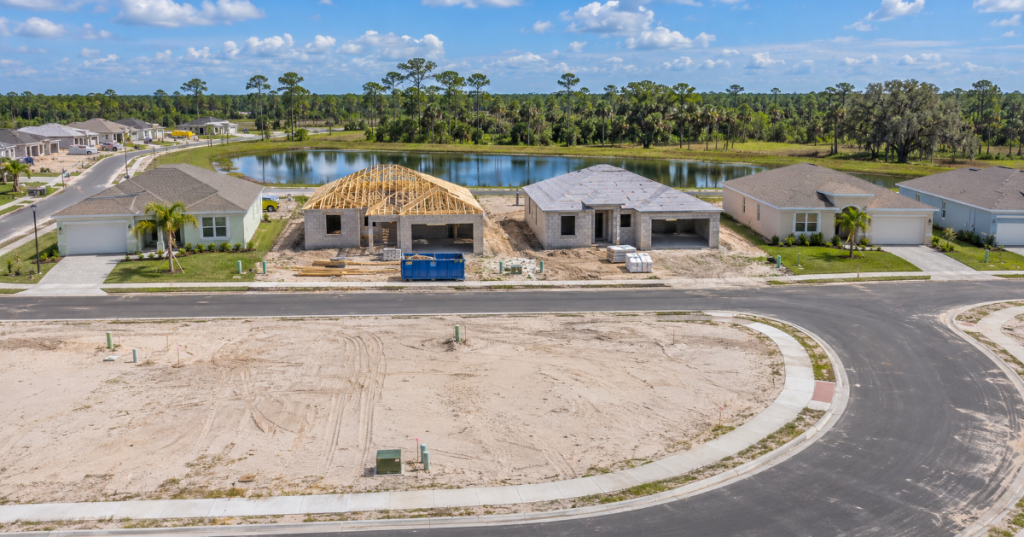
U.S. homebuilders are reassessing what they can pay for residential land and finished lots as sales slow and buyer incentives cut into margins. In a November 3 HousingWire report, Tony Avila, CEO of Builder Advisor Group and Avila Real Estate Capital, said scarce finished lots still give sellers leverage in many markets. Survey results presented at the October 13 Forum for Housing Executives in Lafayette Hill, Pennsylvania, put public builders’ gross margins at about 20%, down from a late-2022 peak of roughly 26%. Sales incentives reached about 8% to 12% of home prices, up from 2% to 3% in 2021.
Slower Home Sales Change What Builders Can Pay
A builder’s offer reflects what it expects to earn from selling the homes. Larger incentives reduce the proceeds from each sale, and a slower sales pace extends the time the builder has to carry land and construction costs. Avila said some builders have written off deposits on deals they no longer plan to close.
That helps explain why a builder might revisit an offer even if nearby home prices appear steady. Two communities with similar advertised prices can support different land bids if one needs larger incentives or takes longer to sell through.
Finished-Lot Scarcity Gives Some Sellers Leverage
In markets where several builders are competing for a limited supply of finished lots, developers with the financial flexibility to wait can hold their asking price. Avila identified the gap between what sellers expect and what builders can justify as a major obstacle to closing deals.
That leverage is specific to the property and its submarket. A finished lot that lets a builder start construction sooner carries a different timeline and cost profile than acreage that still needs approvals and infrastructure. For landowners weighing an offer, the local supply of buildable lots and the sales pace at competing subdivisions can help explain how much room a builder has to move on price.
Source: Housing Wire
