
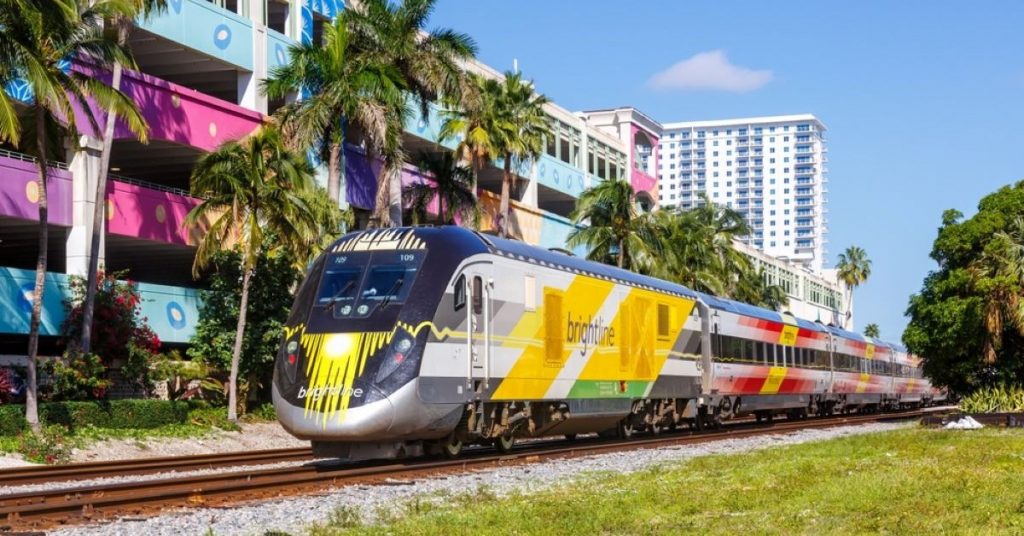
Brightline has transformed passenger travel between Miami and Orlando, providing an alternative to Florida’s congested highways and short-haul flights. Yet the privately operated rail system is now confronting a financial challenge that threatens to overshadow its growing popularity.
The company has taken on billions of dollars in debt while building and expanding its 235-mile Florida network. Much of that financing was based on expectations that passenger volume and revenue would rise rapidly after service reached Orlando in 2023.
Ridership has increased, but not quickly enough to meet those earlier projections or generate the cash needed to cover operating costs and scheduled debt payments. Brightline has consequently drawn down financial reserves, deferred certain payments and entered discussions with creditors about possible restructuring options.
A Growing Service With a Troubled Balance Sheet
Brightline carried nearly 1.5 million passengers during the first five months of 2026, representing a double-digit increase from the same period a year earlier. Additional train cars have also expanded capacity, offering the potential for continued revenue growth.
Those improvements have not erased the gap between the company’s income and its obligations. Credit-rating agencies have downgraded portions of Brightline’s debt, citing depleted reserves, weaker-than-expected revenue and an elevated risk of default.
The company could pursue an out-of-court agreement with lenders, obtain additional financing or use a court-supervised restructuring to reduce its debt burden. A restructuring would not necessarily mean the trains would stop running. Brightline possesses valuable infrastructure, established stations and a customer base that continues to grow—all of which could encourage creditors to preserve the operating business.
Why Brightline Matters Beyond Transportation
The stakes extend well beyond passengers and bond investors. Brightline stations have become development anchors in several Florida cities, encouraging residential, office, retail and hospitality investment around transportation hubs.
MiamiCentral is perhaps the most prominent example, but stations in Fort Lauderdale, West Palm Beach, Boca Raton and Aventura have also influenced surrounding real estate activity. Planned stations and potential extensions could create additional transit-oriented development opportunities if the system remains financially viable.
Local governments also have a significant interest in Brightline’s future. Communities have committed public resources to proposed stations, safety improvements and related infrastructure based on the expectation that passenger rail will support tourism, employment and economic development.
The Central Question Facing Brightline
Brightline has demonstrated that Florida travelers will use intercity passenger rail. The more difficult question is whether that demand can support the cost of constructing and financing a privately operated system of this scale.
The answer may depend on a financial solution that fundamentally changes the company’s debt structure—and determines who ultimately absorbs the cost of keeping Brightline on track.
Source: SFBJ
