
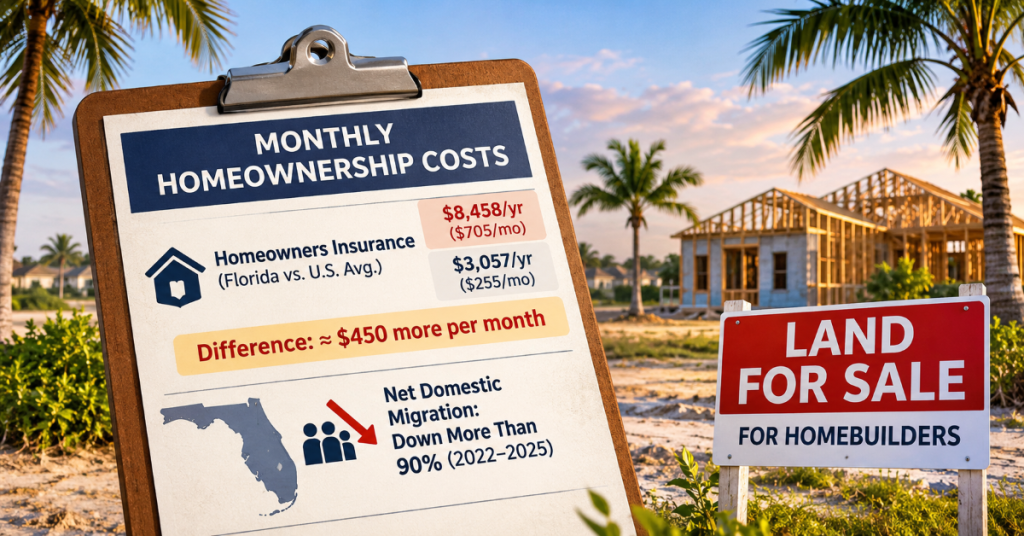
Florida’s residential land market faces an affordability challenge that extends beyond home prices, mortgage rates and construction expenses. According to a November 5, 2026, analysis by Investopedia, Florida’s average annual homeowners insurance premium is projected to reach $8,458 by the end of 2026, compared with $3,057 nationally.
The difference comes as U.S. Census Bureau estimates show that Florida’s net domestic migration declined by more than 90% between 2022 and 2025.
For landowners considering selling property to residential developers, these trends warrant attention.
Housing Affordability Extends Beyond the Purchase Price
While developers must account for land acquisition, infrastructure, construction and financing expenses, the ultimate success of a residential project depends heavily on what prospective buyers can afford.
Florida’s insurance costs translate into an additional expense of approximately $450 per month compared with the national average. That difference can substantially affect a household’s purchasing power, mortgage qualification and choice of location.
For homebuilders, delivering competitively priced homes may become increasingly challenging in areas where insurance premiums are particularly high.
Florida Faces Greater Regional Competition
Although Florida remains relatively affordable compared with states such as New York and California, it faces competition from neighboring southeastern states, including Georgia and Alabama, where homeownership expenses are lower.
Slower domestic migration does not necessarily indicate declining population or housing demand. However, it reinforces the importance of evaluating individual submarkets rather than relying exclusively on Florida’s historical population growth to support development projections.
What This Means for Florida Landowners
As affordability pressures influence homebuyers’ decisions, developers may place greater emphasis on several factors when evaluating potential land acquisitions:
-
Flood zone designations and exposure to natural hazards
-
Infrastructure availability and development expenses
-
Opportunities to deliver more affordable housing products
-
Local housing demand and population growth
-
Anticipated insurance expenses for future homeowners
-
Proximity to employment centers, schools and essential services
Landowners who can demonstrate that their properties support financially viable residential development may be better positioned to attract builder interest.
Ultimately, a parcel’s development potential is not determined solely by its acreage, zoning or location. The ability of a developer to deliver homes with manageable monthly ownership costs could become an increasingly important consideration in land acquisition decisions.
Source: Investopedia
